In the field of industrial manufacturing, welding machines, as the core equipment for metal joining, have a performance that directly determines welding quality and productivity. In recent years, IGBT (Insulated Gate Bipolar Transistor) as the core of the inverter welding machine technology has risen to prominence, by virtue of high efficiency, energy saving, precise control and other advantages, has become the mainstream choice of modern welding process. In this paper, we will analyze the core value of IGBT in welding machine from four dimensions: technical principle, application advantages, typical scenes and future trends.
一First, the technical principle: high-frequency inverter and power conversion “heart”
IGBT in the welding machine plays a core role in the conversion of electrical energy, its working principle can be summarized as “three-level energy conversion”:
Rectification stage: industrial frequency alternating current (such as 380V/50Hz) by the full-bridge rectifier bridge is converted to high-voltage direct current (about 540V DC), for the subsequent inverter to provide a stable energy source.
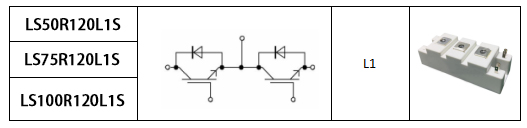
Inverter stage: The IGBT module acts as a high-frequency switch, inverting the DC power into medium-frequency (20-100kHz) or high-frequency AC power. For example, BYD Semiconductor’s IGBT module realizes 650V/75A continuous operating current in a DC welder with a switching frequency of 100kHz, which significantly improves energy density.
Bucking and rectification: High-frequency AC power is bucked by a high-frequency transformer and then rectified again into the stable DC power required for welding, which is finally output to the workpiece through the electrode.
In this process, the fast switching characteristics of the IGBT (nanosecond response) and low on-state voltage drop (about 1-3V) are key. Compared with the traditional thyristor welding machine, IGBT inverter welding machine can reduce the size of the main transformer by 80% -90%, the power conversion efficiency is increased to more than 85%, while reducing more than 30% of the copper and iron core loss.
Application Advantages: Triple Breakthrough in Efficiency, Reliability and Flexibility
- Energy Efficient: Energy Consumption Reduced by Over 40%
IGBT inverter welder reduces switching loss by 30%-50% through high-frequency soft-switching technology (e.g. zero-voltage switching ZVS, zero-current switching ZCS). Take Infineon’s fourth-generation IGBT-T4 chip for example, its soft-switching design reduces the switching loss by 30% compared with its predecessor, and paired with Feihong Semiconductor’s FHA75T65A device, it can realize a continuous working current of 650V/75A, and the efficiency of the whole machine reaches more than 90%, which is far more than the energy efficiency of traditional welding machines of 50%-60%. - Precise control: a qualitative leap in welding quality
IGBT’s microsecond response speed (e.g., NEBULA 500D series pulse width adjustment takes only 20 microseconds) and digital control technology (e.g., DSP/ARM microprocessor) enable the welder to have the following capabilities:
Multi-process integration: supports 8 welding modes such as flux-skin manual welding, argon arc welding, gas-protected welding, etc. The parameters are independently adjustable to adapt to multiple materials such as aluminum, stainless steel and carbon steel.
Expert database: built-in 100 sets of welding process parameter library, covering military, marine, automotive and other high-demand scenarios, ordinary welders can achieve expert welding level.
Dynamic compensation: real-time monitoring of current and voltage fluctuations, automatic correction of the main transformer demagnetization, to avoid damage to the welder, stability increased by more than 50%.
- Reliability and safety: industrial-grade protection design
IGBT welding machine enhances the reliability of the equipment through multiple protection mechanisms:
Over-current protection: When the current exceeds 150% of the rated value, the protection circuit cuts off the output within 100 microseconds to prevent IGBT from blowing up the tube.
Overheating management: Adopt air duct isolation design to avoid dust and rain damage; the heat sink temperature protection point is set at 80℃ to ensure that the chip junction temperature does not exceed the maximum allowable value (e.g. 150℃).
Electromagnetic compatibility (EMC): Reduce high frequency interference by π-type filter circuit to meet the anti-interference requirements of industrial environment.
Typical Application Scenarios: From Industrial Manufacturing to High-end Equipment
- Automobile Manufacturing: The “Efficiency Revolution” of Body-in-White Welding
In the automobile production line, IGBT welder has realized large-scale application. For example, an enterprise using IGBT inverter welder to complete the automotive body-in-white welding, a single device continuous working life of more than 8,000 hours, electrode loss rate of 60% lower than the traditional welder, while supporting automated robot welding, enhance the level of production line flexibility. 2. - Nuclear power pipeline: reliable welding in extreme environments
Nuclear power pipeline welding requires high equipment stability. Equipped with the fourth generation of IGBT module welding machine through the following design to meet the demand:
Voltage resistance: IGBT collector-emitter pin spacing design can withstand 3000V/m insulation strength, adapt to high-voltage environment.
Radiation resistance reinforcement: special packaging materials are used to reduce the impact of radiation on device performance.
Miniaturized design: The main transformer is reduced in size by 90%, making it easy to deploy in tight spaces.
- Aluminum Alloy Press Welding: Precise Control of High Thermal Conductivity Materials
Aluminum alloy press welding requires high pulse current output (e.g. 600A) to overcome the high thermal conductivity of the material. The FHA60T65A single-tube full-bridge circuit realizes precise control of the current through high-frequency inverter, which significantly improves the quality of the weld seam and achieves a yield rate of 99.5%.
Conclusion
From automobile body-in-white to nuclear power pipeline, from aluminum alloy pressure welding to intelligent production line, IGBT is redefining the modern welding process with the core advantages of “high efficiency, precision and reliability”. With the breakthrough of SiC technology and intelligent upgrading, IGBT welding machine will continue to promote industrial manufacturing to green, flexible and intelligent direction, and become the key infrastructure for the transformation and upgrading of global manufacturing industry.